

As members of your electric cooperative We want you to STAY SAFE!
We're all about keeping you informed on electrical safety and making sure our team stays safe too. Looking for an electrical safety demonstration at your school or event? Don't hesitate to contact our team.
Outdoor Safety Tips
- Never touch a power line! Report downed power lines immediately
- Don’t put signs or advertisements on power poles – they are a hazard and reduce the life of the pole
- Be careful not to touch overhead power lines with ladders, TV antennas or other equipment
- Never retrieve balls or other objects from substations – high-voltage equipment is very dangerous
Indoor Safety Tips
- Always replace damaged cords
- Never use electrical appliances in wet areas
- Pull on the plug, not the cord, to unplug an appliance
- Don’t overload outlets with too many appliances
- Unplug extension cords if not in use
- Use the correct wattage for light bulbs. Higher than recommended wattages can overheat and lead to fire

Tree Maintenance
Nobles Cooperative Electric is committed to providing safe, reliable energy, which necessitates pruning trees near power lines.
Our vegetation management program is not random, but by design, and strives to be proactive. This program is based on industry best practices designed to prevent dangerous situations and ensure electric reliability.
Our vegetation management program recognizes trees may be the cause of some power outages but are also a very important part of the natural beauty of our valley.
We strive to work collaboratively with you to address any concerns before tree work begins.
Electrical Safety Tips During And After A Storm
Lightning
- Move to a low point. Lightning hits the tallest available object, so get down low in a crouched position if you are in an exposed area.
- Stay away from trees.
- Avoid metal. Don’t hold onto metal items like bats, golf clubs, fishing rods, tennis rackets or tools. Stay away from metal sheds, clotheslines, poles and fences.
- Stay away from water, including pools, lakes, puddles and anything damp—like grass.
- Don’t stand close to other people. Spread out.
Not necessarily, but sometimes. If you feel a tingling sensation or your hair stands on end, lightning may be about to strike. Do not lie down. Instead, crouch down, tuck your head and cover your ears.
Slow down and use extra caution. If possible, pull off the road into a safe area.
Do not leave your vehicle during a thunderstorm. A vehicle is considered safe during a thunderstorm if it is fully enclosed with a metal top such as a hard-topped car, minivan, bus, truck, etc. While inside a safe vehicle do not use electronic devices, such as radio communications.
Follow these indoor lightning safety tips to help keep your family safe inside while it’s storming outside:
- To avoid lightning strikes, stay away from windows and doors.
- If possible, unplug electronic equipment before the storm arrives. Avoid contact with electrical equipment and cords during storms.
- Avoid contact with water and plumbing, including sinks, baths and faucets.
Use corded telephones only for emergencies. You can use cordless or cellular phones.
Doghouses are not lightning-safe and chained animals can easily become victims of lightning strikes. You should bring your pets inside to protect them.
When thunderstorms are rolling your way, stay safe with these helpful tips:
- Listen to local news or NOAA Weather Radio for emergency updates. Watch for signs of a storm, like darkening skies, lightning flashes or increasing wind.
- Postpone outdoor activities if thunderstorms are likely to occur. Many people struck by lightning are not in the area where rain is occurring.
- If a severe thunderstorm warning is issued, take shelter in a substantial building or in a vehicle with the windows closed. Get out of mobile homes that can blow over in high winds.
- If you can hear thunder, you are close enough to be in danger from lightning. If thunder roars, go indoors! The National Weather Service recommends staying inside for at least 30 minutes after the last thunder clap.
- Avoid electrical equipment and telephones. Use battery-powered TVs and radios instead.
- Close windows and outside doors securely. Keep away from windows.
- Do not take a bath, shower or use plumbing.
- If you are driving, try to safely exit the roadway and park. Stay in the vehicle and turn on the emergency flashers until the heavy rain ends. Avoid touching metal or other surfaces that conduct electricity in and outside the vehicle.
- If you are outside and cannot reach a safe building, avoid high ground, water, tall, isolated trees and metal objects such as fences or bleachers. Picnic shelters, dugouts and sheds are NOT safe.

What Happens In A Flood?
Use extreme care when stepping into flooded areas. Submerged outlets or electrical cords can energize water, posing a lethal trap.
If you see someone who is in direct or indirect contact with the downed line, do not touch the person. You could become the next victim. Call 911 instead.
Electrical items, such as circuit breakers, fuses, ground fault circuit interrupters (GFCIs), receptacles, plugs and switches, can malfunction when water and silt get inside. Discard them if they have been submerged. Have a licensed, qualified professional replace them.
Damage to electrical equipment can result from exposure to flood waters contaminated with chemicals, sewage, oil and other debris.
No matter what caused the flood, electrical appliances should be examined by a qualified service repair dealer before being re-energized and electrical items that were submerged should be discarded and replaced by a licensed, qualified professional.
Yes—downed power lines or submerged outlets from adjacent homes could energize the water. Use extreme caution when entering any flooded area.
Down Power Line Safety
If you see a downed power line, move at least 10 feet away from the line and anything touching it. The human body is a ready conductor of electricity.
The proper way to move away from the line is to shuffle away with small steps, keeping your feet together and on the ground at all times. This will minimize the potential for a strong electric shock. Electricity wants to move from a high voltage zone to a low voltage zone—and it could do that through your body.
If you see someone who is in direct or indirect contact with the downed line, do not touch the person. You could become the next victim. Call 911 instead.
Do not attempt to move a downed power line or anything in contact with the line by using another object, such as a broom or stick. Even non-conductive materials like wood or cloth, if slightly wet, can conduct electricity and then electrocute you.
Do not drive over downed power lines.
If you are in your car and it is in contact with the downed line, stay in your car. Tell others to stay away from your vehicle. If you must leave your car because it’s on fire, jump out of the vehicle with both feet together and avoid contact with the live car and the ground at the same time. This way you avoid being the path of electricity from the car to the earth. Shuffle away from the car.
Water is a good conductor of electricity. Any amount of water—even a puddle—could become energized. Be careful not to touch water—or anything in contact with the water—near where there is a downed power line.
What To Do During an Outage
After you’ve verified that your outage has been reported, please keep phone lines open for all members affected by the outage. We know that being without power is inconvenient and frustrating, and we assure you that one call is all you need to make.
During a Power Outage
- Keep freezers and refrigerators closed.
- Only use generators outdoors and away from windows.
- Do not use a gas stove to heat your home.
- Disconnect major appliances and electronics to avoid damage from electrical surges.
- Have alternate plans for refrigerating medicines or using power-dependent medical devices.
- Check on neighbors.
For more tips, visit the Department of Homeland Security or the American Red Cross website.
Clearance Levels and Farm Safety
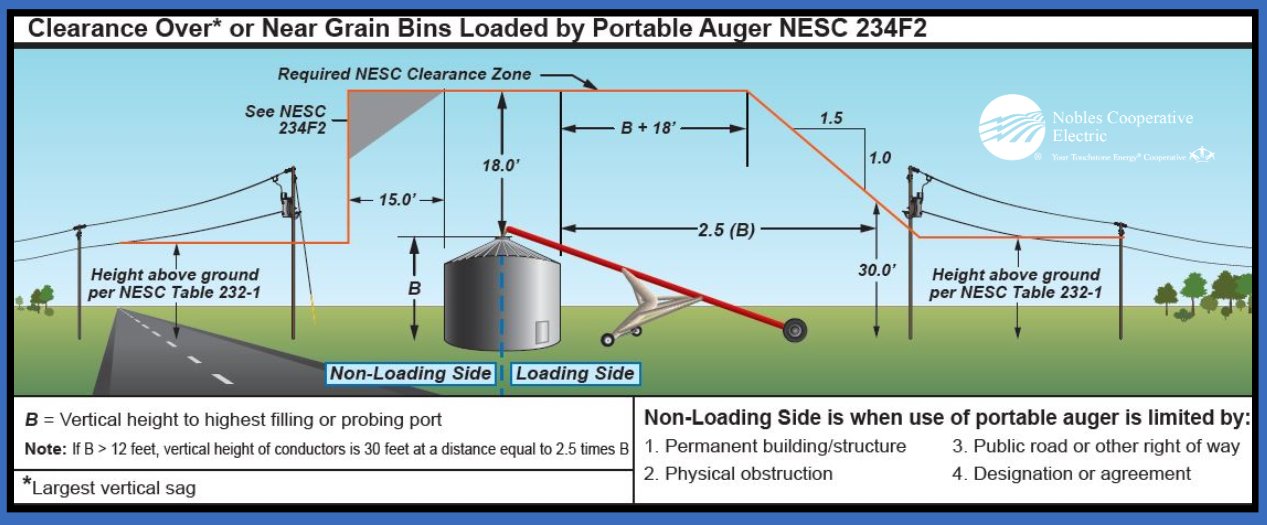
The National Electric Safety Code sets minimum clearance distances between power lines and obstructions or the ground. In addition, the federal government has strict reliability standards for electrical lines. Obstructions in the right of way can be too close to our lines, causing reliability problems and safety issues.
Electric lines are the backbone of the regional electric grid. They are vital to our economic health and our nation’s security. Keeping the areas beneath them clear is critical for your safety and the safety of our employees. And it’s an important part of maintaining the reliability of electric service for you and your neighbors.
Take a moment to review the clearance levels in the Application Guide and contact us should you have any questions.
Farmers looking to install a new grain bin can streamline their planning process by involving Nobles Cooperative Electric. The cooperative offers support to ensure a safe environment for those who work and reside near grain bins.

Call Before You Dig
Before you start landscaping, digging or excavating more than 12-inches deep, remember you must have your underground lines located. It is the law! Call Gopher State One Call at 800-252-1166, 811 or visit their website at GopherStateOneCall.org to have your lines clearly marked so you can work safely on your project. Make your call 48 hours before digging.
Digging may seem like no big deal, but regardless of where you live or conduct your business, the gas, electric, cable, water and sewer lines that serve you, may very likely be underground. It doesn’t matter how deep you plan to dig, be safe and call because hidden dangers could be just beneath the surface.
The MN State Statute 216D One Call Law Updated, Changes Effective Aug. 1, 2024
Safety Blog
Back to School Means More Than New Notebooks
August always seems to arrive faster than expected. Before we know it, school buses are back on the roads, backpacks are packed, and many families are helping a son or daughter settle into a college dorm or first apartment. As you prepare for the new school year, it’s also a good time to think about […]
Trees Grow. Problems Don’t Have To.
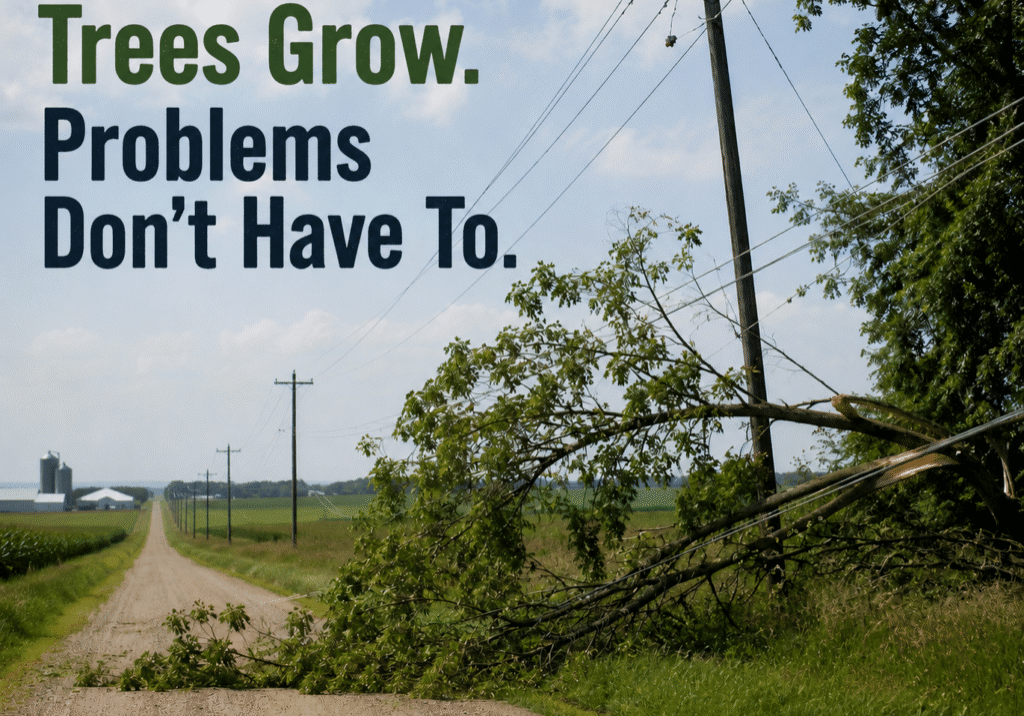
Trees Grow. Problems Don’t Have To. Summer is a great time to look up! As trees fill out with leaves, branches can quietly grow closer to overhead power lines. With thousands of miles of line stretching across our rural service territory, we can’t be everywhere at once-and that’s where you can help. We’d love an […]
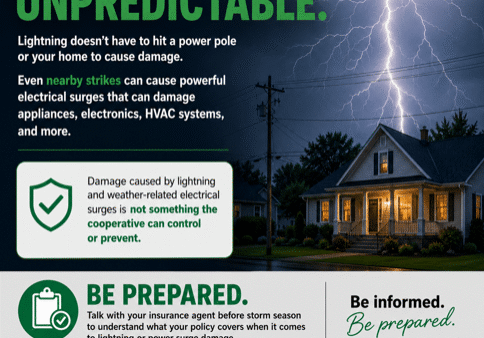
Lightning Strikes
When Lightning Strikes: Understanding the Risks and Preparing Ahead Summer storms can arrive quickly, bringing heavy rain, strong winds, and one of nature’s most powerful forces-lightning. Many people assume lightning damage only occurs when a bolt directly strikes their home, farm, business, or an electrical power line. In reality, lightning doesn’t have to make a […]
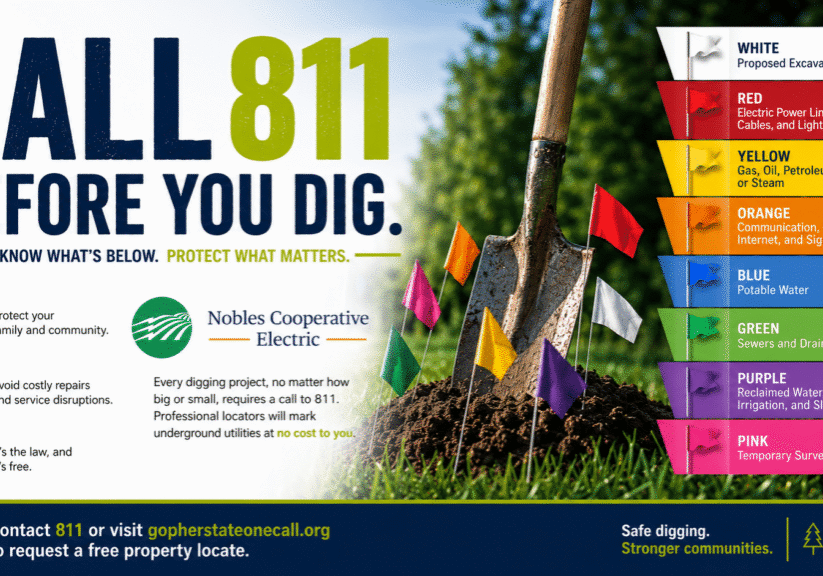
Call Before You Dig
Call 811 before You Dig Know the Utility Marker Colors Before You Dig Planning a landscaping project, fence installation, deck, mailbox, or even planting a tree? Before you dig, it is important to know what may be buried underground. Professional utility locators use a universal, color-coded system of flags and spray paint to mark underground […]
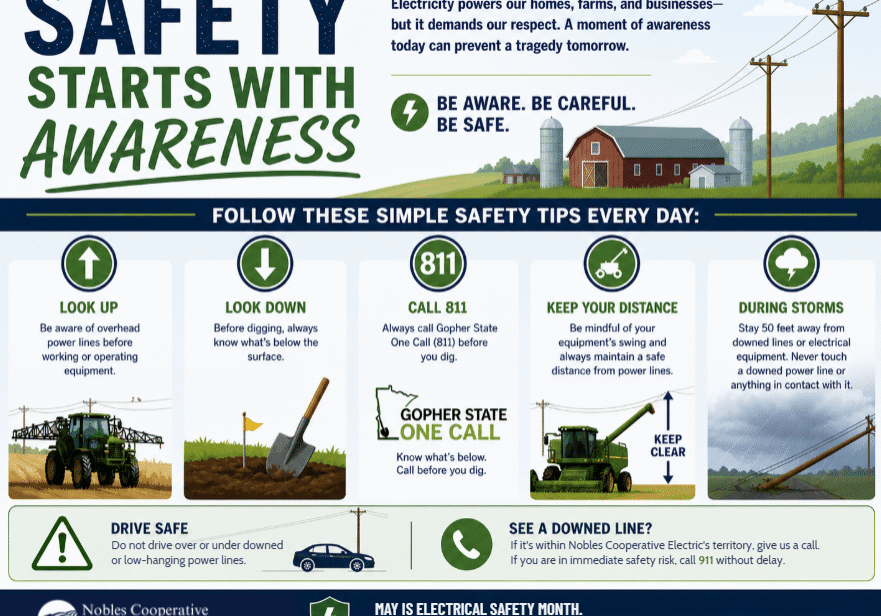
Electrical Safety Month
Safety Starts With Awareness: May is National Electrical Safety Month Each May, utilities and safety organizations across the country recognize National Electrical Safety Month – a reminder that electricity powers nearly every part of our daily lives, but it also deserves our respect. At Nobles Cooperative Electric, safety is something we think about every day. […]

Spring Ditch Burning Season: Safety First for Our Power Lines
Spring in southwest Minnesota brings warmer weather and the annual task of clearing road ditches and fence lines. While controlled burning can be an effective management tool, Nobles Cooperative Electric encourages members to plan ahead and prioritize safety before striking a match. The Unpredictability of Fire Even a carefully planned burn can quickly become unpredictable […]

Putting Safety First – At Work, At Home, Always
Safety Training Recap Safety is also important at home-please remember to take a moment to review your own emergency plans, have a strategy in place, and stay prepared to protect your loved ones A few weeks ago, Nobles Cooperative Electric held its fourth of nine scheduled safety training events for 2025-part of our ongoing, year-round […]

May is Electrical Safety Month
May is Safety Month Electrical Safety Month Our farming community, members, construction crews, and DIY enthusiasts are all extremely valuable to our Nobles Cooperative Electric family, and we want to share a few reminders for your spring projects. Whether you’re working in your farm fields or your own backyard, please remember these safety tips: Stay […]

Space Heaters: Don’t get Burned
Space Heaters: Don’t get Burned Space Heater Safety: Stay Warm and Safe This Winter According to the National Fire Prevention Association, nearly half of the heating equipment fires (46%) occur in the three-month period from December through February. While they can be a great way to stay cozy, it’s crucial to use them responsibly. Here […]

Winter Chills
Old Man Winter can bring some serious chills! Here’s how to stay safe and warm, indoors and out: Beat the Freeze Outdoors Layer Up: Wear loose-fitting, lightweight layers to trap warm air. Head to Toe: Don’t forget a hat and mittens (they’re warmer than gloves!) Stay Dry: Wet clothes can make you colder. Block the […]

Holiday Hazards – Pets
Holiday Hazards: Keep Your Pets Safe All Year Round The holidays bring extra dangers for our furry friends. Festive decorations, tempting treats, and new electronics can all pose risks to curious pets. While the holidays might heighten the dangers, it’s important to be vigilant year-round. Here’s how to keep your pets safe: Electrical Hazards: Cords […]

Winter Safety Tips
Stay Safe This Winter: 5 Home Safety Tips Winter’s chilly embrace brings with it a desire for warmth and comfort within our homes. But as we turn up the heat, light festive candles and rely more on electrical appliances, the risk of home fires increases. Take these five simple steps to safeguard your home and […]
Have questions?
Your Cooperative team is here to assist with your membership and service questions.